Road closure rules in Islington and how they affect removals
If you are moving in or out of Islington, road closures can turn a straightforward removal into a bit of a puzzle. One minute you are counting boxes, the next you are wondering whether the van can reach the front door, where parking is still possible, and whether a diversion will add an extra hour to the day. Road closure rules in Islington and how they affect removals is not just a traffic issue; it directly shapes timings, access, loading, parking, and even the size of vehicle that makes sense. This guide breaks it down in plain English so you can plan properly, avoid last-minute stress, and keep the move moving.
In practice, the best removals in Islington are rarely the ones with the biggest truck or the fastest team. They are the ones that respect access restrictions, understand local street conditions, and build a realistic plan around closures, permits, and narrow residential roads. That is where a little local know-how saves a lot of grief.
Table of Contents
- Why road closure rules in Islington matter for removals
- How road closure rules in Islington affect a moving day
- Key benefits and practical advantages
- Who this is for and when it makes sense
- Step-by-step guidance
- Expert tips for better results
- Common mistakes to avoid
- Tools, resources and recommendations
- Law, compliance, standards and best practice
- Options, methods and comparison table
- Case study or real-world example
- Practical checklist
- Conclusion
- Frequently asked questions
Why Road closure rules in Islington and how they affect removals Matters
Road closures matter because removals depend on access. That sounds obvious, but it is amazing how often people focus on the packing and forget the street outside. In Islington, a closure can mean a van cannot stop where you expected, the route to the property is blocked, or a short loading window gets swallowed by diversions and busy local traffic.
For home moves, the effect is usually simple but annoying: your team may need to park further away and carry items longer distances. For flats, especially upper-floor properties, that extra carry can add real time and physical strain. For business moves, the stakes are higher. If you are relocating a small office and the lorry cannot access the building at the agreed time, staff downtime creeps in. Nobody wants to spend a Monday morning standing in the rain, holding a monitor, while waiting for a road to reopen.
There is also a knock-on effect on cost. Delays can mean extra labour time, extra vehicle time, and in some cases a second visit if access becomes impossible. Even when costs do not rise, the stress does. To be fair, moving day already comes with enough drama. You do not need a closure turning it into a scramble.
Islington is especially sensitive to access planning because many streets are narrow, heavily parked, or shared with buses, delivery traffic, cyclists and pedestrians. That means road closure rules do not sit in the background. They shape the whole operation.
Practical takeaway: if your move relies on a specific street, bay, or access point, treat road closure checks as part of the removal plan, not an optional extra.
How Road closure rules in Islington and how they affect removals Works
Road closure rules are essentially controls that restrict vehicle movement on specific streets, at specific times, or for specific activities. In a removals context, the exact effect depends on the type of closure and how close it is to your property.
A temporary closure might be in place for utility works, resurfacing, building works, an event, or emergency repairs. Sometimes the closure is complete. Sometimes it is partial, which sounds more convenient than it is. Partial closures can still prevent a large vehicle from turning, stopping, or safely unloading. In a place like Islington, a "technically passable" road may still be useless for a removal van if there is nowhere to stand and carry items from.
There are also practical access controls that are not full closures but work almost like one for moving purposes:
- single-file traffic
- temporary no-stopping zones
- resident-only parking restrictions
- one-way diversions
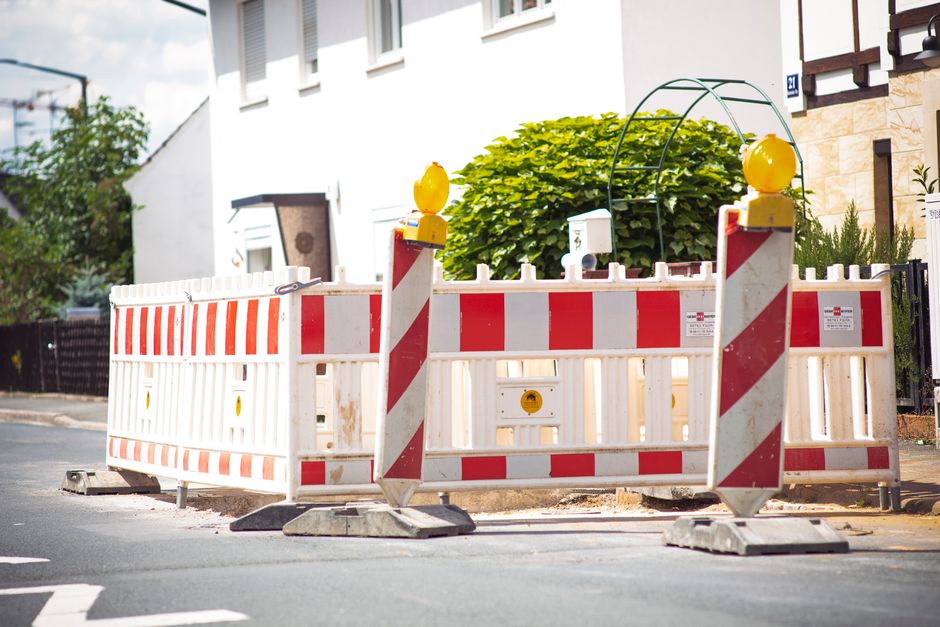
- roadworks with barriers or traffic marshals
- events that limit vehicle movement during set hours
For removals, these rules affect three things in particular:
- Arrival time - your moving team may need to arrive earlier or later to avoid peak disruption.
- Parking and loading - the vehicle may need to stop farther away, use a different bay, or wait for a legal space.
- Route planning - the quickest route on a map is not always the one that works on the day.
In real life, a small change can matter a lot. A closure two streets away may add just ten minutes on paper, yet cost thirty or forty minutes if it means circling narrow roads and looking for a safe loading point. And once a removal starts running late, the rest of the day can unravel quickly.
This is why experienced teams tend to build in a margin. They do not assume the street will behave nicely just because it looks fine the day before. Streets change. Works appear. Traffic builds. It happens.
Key Benefits and Practical Advantages
Planning around road closure rules is not just about avoiding trouble. Done well, it gives you a smoother, calmer move with fewer surprises.
- Better time control: if you know the closure pattern, you can book the right time slot rather than guessing.
- Safer handling: shorter carrying distances and clearer access reduce the chance of knocks, trips, or rushed lifting.
- Lower chance of penalties: illegal parking or obstructing a closure can create unnecessary problems. No one needs that kind of ticket on moving day.
- More accurate quotes: removal companies can estimate labour and vehicle time more realistically when access is understood early.
- Less customer stress: it is easier to stay calm when there is a plan for alternate access or staged loading.
There is a hidden benefit too: better communication. Once road closure rules are part of the move discussion, everyone starts talking about the same thing-where the van can stop, how long unloading will take, what happens if the road is shut, and whether a smaller vehicle might be wiser. That kind of clarity saves friction later.
If you are comparing providers, it is worth looking beyond the headline service and into their approach to planning. A good local mover should be able to discuss access in a practical way, not just promise that "it'll be fine."
Who This Is For and When It Makes Sense
This issue matters to almost anyone moving in Islington, but some people need to think about it more carefully than others.
Households moving from terraced streets or tight residential roads often need careful parking and carrying plans. If the closest stopping point is blocked, the job changes immediately.
Flat movers have another layer to think about, especially in multi-storey buildings without direct lift access. A longer carry from the van can be a real factor. If that sounds familiar, flat removals are usually best planned with access details pinned down first.
Families moving larger loads may want to think about whether a bigger vehicle is actually useful if the road layout makes it hard to stop. Sometimes a more flexible approach works better than one large trip. That is where home moves planning becomes especially valuable.
Students usually have fewer items but more time pressure. If you are moving out at the end of term and a road closure lands on the same day, the whole thing can become awkward very quickly. A service like student removals may suit those tighter handover deadlines.
Businesses and offices need to be especially careful. Staff, IT kit, furniture and documents are all time-sensitive. If the access route is blocked, the move can interrupt operations longer than expected. For that reason, commercial moves and office removals often benefit from a more detailed schedule.
Anyone using a man and van service should not assume the smaller vehicle solves everything. It helps in tighter streets, yes, but a closure or no-stopping zone can still disrupt the job. The flexibility of a man with van or man and van service is useful, but only if the route and stopping point are realistic.
Step-by-Step Guidance
If you want the move to go smoothly, the best approach is to plan backwards from the property, not forwards from the van. Here is a simple way to do it.
- Check the moving date against likely roadworks or closures. Start early. Even if you do not have exact closure details yet, think about local events, planned works, and seasonal traffic patterns.
- Assess the property access. Look at the street width, turning space, parking options, and whether loading is possible directly outside. If not, note the distance from the nearest legal stopping point.
- Choose the right vehicle size. A larger truck may be efficient on paper, but a smaller removal van or flexible removal truck hire option may be safer in a restricted street.
- Build a loading plan. Decide which items come out first, where they are placed, and who is responsible for doors, lifts, and directions. The boring bit, basically. But the boring bit matters.
- Keep your mover updated. If a closure changes the route, tell the team as soon as possible. A five-minute warning is not much help; an update the day before is far better.
- Leave buffer time. If the route is normally thirty minutes, give it more room. London traffic has a funny way of proving assumptions wrong.
- Have a backup plan. If the road is closed, where can the vehicle stop instead? Which gate, side street, or alternate entrance can be used?
One useful habit is to walk the final approach to your property on foot the day before, or even the morning of the move if you can. You will spot things Google maps cannot fully tell you: the narrowing pavement, the school run congestion, the contractor's barriers, the van already parked in the only sensible bay. Small details, big difference.
Expert Tips for Better Results
A few practical habits tend to make the biggest difference on closure-sensitive moves.
- Book earlier in the day when possible. Traffic usually gets worse as the day goes on, and any delay is easier to absorb before the afternoon rush.
- Use a mover that understands local access issues. Familiarity with Islington streets helps. It is not magic, just experience.
- Separate essentials from everything else. If there is a delay, you will want documents, keys, chargers, medication, and kettle supplies close at hand. Because yes, tea still matters.
- Label items clearly. When the team has to move quickly after parking farther away, clear labels save time and reduce confusion.
- Be honest about awkward items. A piano, a heavy sideboard, or fragile artwork changes the plan. Mention it early so the route and loading method can be adjusted.
- Ask how delays are handled. Good providers should explain what happens if the road is blocked or unloading is slowed by external factors.
If your move is time-critical, consider whether a short-term storage option makes sense. Sometimes the calmest solution is to move the less urgent items first and sort the rest once the access issue clears. For that sort of flexibility, storage can be a sensible pressure valve.
And a small but important point: do not leave parking to chance. In busy areas, parking is not a "we'll see on the day" kind of task. It needs attention. A lot of attention, actually.
Common Mistakes to Avoid
Most removal headaches linked to road closures come from a handful of avoidable mistakes.
- Assuming the street will be open. It might be today. It might not be tomorrow. That assumption gets expensive very quickly.
- Ignoring loading restrictions. Even if a road is open, you may not be allowed to stop where you want.
- Choosing the wrong vehicle. A large truck may look efficient but become awkward in a street with limited turning or blockage points.
- Leaving access checks until the morning of the move. By then, the team is already on the clock.
- Not planning for longer carry distances. Carrying furniture 20 metres versus 60 metres is not the same job. Not even close.
- Failing to warn the mover about building works. Temporary barriers, scaffolding, and skips can all change access, and they often appear just when you do not want them to.
Another common one: people over-focus on the postcode and under-focus on the actual street. Two properties in the same area can be wildly different in how easy they are to access. One is a dream. The next is all tight turns and double parking. That is London for you.
Tools, Resources and Recommendations
You do not need a complicated system to plan around road closures. A few simple tools and habits are usually enough.
- Your removal company's planning questions: a good company should ask about access, parking, floor level, lifts, and timing. If they do not, say the details anyway.
- Property walk-through notes: jot down gate codes, buzzer instructions, stairwell width, and any awkward corners.
- Calendar reminders: set reminders for parking bay checks, keys, access permissions, and building notices.
- Photos of the street and frontage: these are surprisingly helpful when explaining access to movers.
- Flexible service options: if you think closures may slow the job, a more adaptable service can be useful. For example, removals can be tailored differently from a one-size-fits-all move.
For customers moving a few bulky items rather than a full household, a lighter setup can help around tighter streets. In those cases, furniture removals or furniture pick up may be more practical than a larger-scale operation.
If you are moving without full household contents, or the route is tight and unpredictable, a smaller and simpler approach can reduce the risk of getting stuck. Sometimes less is more. Annoying, but true.
Law, Compliance, Standards, or Best Practice
When road closure rules affect removals, the main point is not to guess. You need to follow the rules that apply to the road, the vehicle, and the time of day. Exact requirements can vary depending on the location and the type of restriction in place, so it is safest to treat access control as a compliance issue, not just a convenience issue.
In UK moving practice, a few standards of behaviour matter even when the legal details differ from street to street:
- Do not block traffic or access routes. This includes keeping clear of junctions, emergency access points, and pedestrian routes.
- Observe loading and waiting restrictions. A vehicle stopping "just for a minute" may still be in breach.
- Protect public safety. Carrying routes should be chosen so the team and the public are not exposed to unnecessary risk.
- Plan for insurance-sensitive risks. Delays, damage, and unsafe loading often become more likely where access is tight or rushed.
It also helps to work with a company that treats safety as part of the service, not a footnote. Pages such as health and safety policy and insurance and safety are there for a reason: they show that moving-day risk is being thought about properly. Likewise, if you want to understand the company background before booking, about us can tell you more about how the business presents itself.
Best practice, in plain terms, is simple: check access, keep clear records, communicate early, and choose a service that can adjust when the street does not cooperate. That is the professional way to do it.
Options, Methods, or Comparison Table
Different move types cope with road closures in different ways. The right choice depends on how restricted the street is, how much you are moving, and how much time pressure you are under.
| Move option | Best for | How it helps with closures | Main limitation |
|---|---|---|---|
| Full removals | Complete home or office moves | Structured planning, more manpower, better handling of complex access | Can be less flexible if the road is heavily restricted |
| Man and van | Smaller or simpler moves | More manoeuvrable in tight streets and easier to re-route | May require more trips for larger loads |
| Removal van | Medium loads and urban access | Good balance of capacity and street flexibility | Parking still needs to be managed carefully |
| Removal truck hire | Bulkier loads with planned access | Useful when loading space is secured in advance | Less suitable where road closures limit stopping points |
| Storage plus phased moving | Moves with timing uncertainty | Reduces pressure if access is disrupted on the day | Can add an extra step to the move |
If your street is prone to temporary closures, the most efficient option is not always the largest one. A smaller vehicle with a smarter loading plan can beat a larger truck sat helplessly round the corner. Slightly unglamorous, maybe. But effective.
Case Study or Real-World Example
Imagine a flat move in Islington on a weekday morning. The property is on a busy residential street with occasional utility works. The customer initially assumes the van can park outside because there is usually "a bit of space" opposite the building. The team checks the access in advance and notices temporary barriers just two doors down, plus a loading restriction that overlaps with the scheduled arrival time.
Rather than pushing ahead and hoping for the best, the move is adjusted. The arrival is brought forward slightly, a nearby legal stopping point is selected, and the loading order is changed so the heavier items go first while the access is clearest. The customer also keeps essentials separate and has the keys ready before the team arrives.
The result? The move still takes a bit longer than a perfect no-closure day would have done, but it stays calm. No blocked lane. No frantic phone calls. No one sweating over a sofa that will not turn the corner. Just a sensible, slightly unremarkable moving day, which is often the best outcome you can ask for.
That is the real lesson here. Road closure rules do not have to ruin removals. They just need to be planned for early.
Practical Checklist
Use this checklist before moving day if road closures could affect your removal in Islington.
- Confirm the moving date and arrival time.
- Check whether any roadworks, closures, or events are likely to affect the route.
- Look at parking and loading options near both properties.
- Measure or estimate the walking distance from the vehicle to the entrance.
- Tell the removal company about narrow streets, barriers, lifts, or stairs.
- Decide whether a van, truck, or phased move is the better fit.
- Keep keys, access codes, and contact details ready.
- Pack a separate essentials bag for the first night.
- Have a backup stopping point in mind.
- Build in extra time for delays and traffic.
- Keep fragile, heavy, or awkward items clearly identified.
- Check the company's pricing, terms, and payment details in advance through pricing and quotes and payment and security.
If you are still deciding which service setup fits your move, it can also help to review the wider range of removal services available and match the option to your street access, not just your room count.
Conclusion
Road closure rules in Islington and how they affect removals is really about one thing: access. When the street is clear, a move feels straightforward. When the road is restricted, everything from vehicle choice to lifting time can change. The good news is that most of the stress is manageable if you plan early, keep the route practical, and choose a mover who understands local conditions.
Think of it this way. The boxes matter, yes. The sofa matters too. But the bit outside the front door can decide whether your day feels smooth or chaotic. Get that part right and everything else gets easier. A little patience, a bit of planning, and the move usually lands well in the end.
Get a free quote today and see how much you can save.
Frequently Asked Questions
What are road closure rules in Islington and how do they affect removals?
They are the access restrictions that limit where and when vehicles can drive, stop, or load on certain streets. For removals, they can affect parking, unloading, timing, and the route your van or truck uses.
Can a removal van still operate if my street is partly closed?
Sometimes, yes. But it depends on whether the closure still leaves a safe legal stopping point and enough access to the property. A partial closure can still make a move impractical even if the road is not fully shut.
Do road closures always increase removal costs?
Not always. If the team plans ahead and access is still workable, the move may stay within the original scope. But delays, extra carrying distance, or a second trip can increase labour or vehicle time.
Should I choose a smaller vehicle for a street with closures?
Often that helps, especially on narrow roads or where turning space is tight. But the best choice depends on the size of the load, the distance from the vehicle to the property, and whether parking is available nearby.
How far in advance should I check for closures?
As early as possible. Ideally, you should check during the planning stage and then again closer to moving day. Streets change quickly in London, so a second check is sensible.
What happens if the road is closed on the day of my move?
Your team may need to re-route, use a different stopping point, or adjust the moving sequence. If the closure makes access impossible, the move may need to be delayed or split into stages.
Can road closures affect office removals more than home moves?
Yes, often they can. Office removals usually involve tighter schedules, more equipment, and a stronger need to reduce downtime. Even a short delay can affect staff and operations.
Is parking permission the same as a road closure rule?
No. Parking permission and road closure restrictions are related but different. A road may be open but still have strict loading or waiting rules, which can affect removals almost as much as a closure.
What should I tell my removal company about access?
Tell them about closures, roadworks, narrow streets, gates, lifts, stairs, parking limits, and any building restrictions. The more accurate the access information, the better the plan.
Are student removals easier around road closures?
Usually they are easier in terms of load size, but not necessarily in terms of access. Student removals still need good timing, especially during term-end periods when local roads can be busy and parking is tight.
Can storage help if my move is disrupted by a closure?
Yes. If access problems mean the move cannot be completed in one go, storage can give you breathing room and reduce pressure on the day.
What is the best way to avoid problems with Islington road closures?
Plan early, check the street, choose the right vehicle, and keep your mover updated. Simple, really. The boring admin is what saves the day.